Jello Cake Recipe
I love a good retro poke treat — bright, fun, and ridiculously moist. This version turns a simple baked layer into a chilled, spoonable dessert that shines at summer cookouts.
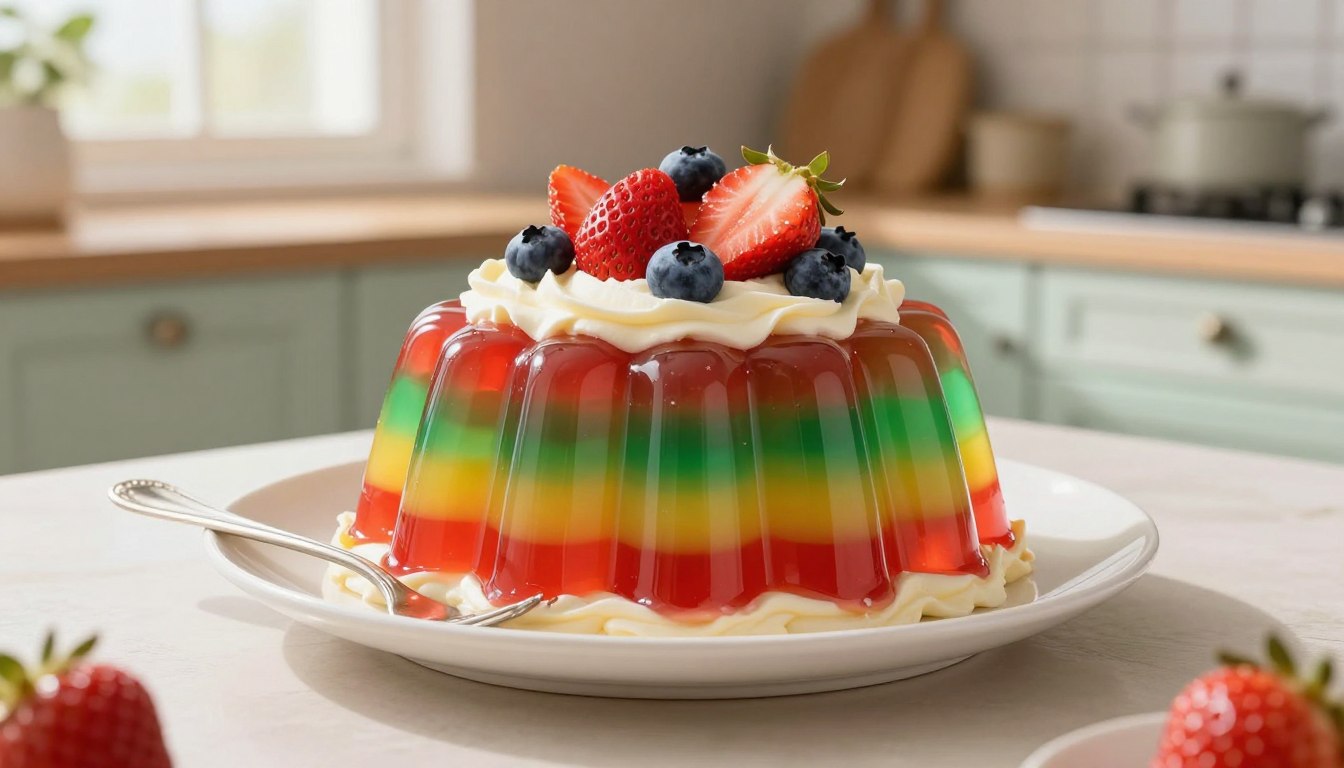
Here’s the big promise up front: colorful streaks run through each slice, it serves cold and creamy, and the method feels almost too easy. You bake, cool, poke holes, pour over flavored gelatin, chill, then top before serving.
The texture is not a light sponge. Think tender, pudding-like bites that hold their shape on a fork yet melt on your tongue. It’s the kind of pan dessert you bring to a picnic and watch disappear.
Key wins we’ll cover: ideal hole size, how to pour without over-saturating, and chill time that gives the best set. Pick a modern flavor and this retro crowd-pleaser feels fresh again.
Why Jello Cake Is the Retro-Cool Dessert Everyone Loves
This retro dessert keeps turning heads at backyard barbecues for one simple reason: it’s colorful and fuss-free. I love how a familiar idea from the past becomes modern again with bold gelatin and fresh toppers.
A 1970s comeback
In the 1970s, jello helped make gelatin trendy again. Brands leaned into bright colors and easy prep, so people could bring something fun to potlucks without fuss.
Why the pokes matter
A poke cake is just a baked pan with lots of little holes. I use a fork or skewer to pierce the top so syrupy gelatin can sink in.
Those holes act like flavor tunnels. The result is chilled, moist, and almost pudding-like in texture. It slices cleanly and keeps guests coming back for more.
- Visual payoff: bright streaks in every slice.
- Flavor tip: bolder colors usually equal bolder taste.
- Timing note: chilling time is non-negotiable for a good set.
| Feature | 1970s Origin | What You Get |
|---|---|---|
| Era | Jell-O comeback | Vintage vibe for summer |
| Texture | Pierced and soaked | Moist, pudding-like bites |
| Chill time | Several hours | Firm set, easy slicing |
| Visual | Bright gelatin streaks | Photo-ready slices |
What You Need to Make a Perfect Poke Cake
Choosing the right baking vessel makes serving a breeze and keeps the slices neat. I start with a 13-by-9 pan because it bakes evenly and travels like a champ. Serve straight from the pan—no flipping—so the topping stays put and transport is stress-free.
Best pan size and baking dish setup for easy serving
A 13×9 pan is the classic move. A deeper baking dish (higher sides) catches every drop of gelatin, which saves your counters and keeps the dessert tidy.
Tools for poking holes: toothpick vs. fork
For poke holes I favor a toothpick for small, even holes that give a gentle soak. A fork makes larger holes and gives more gelatin per bite, so pick based on how puddly you like the top layer.
- Hole spacing: aim for rows an inch apart so the gelatin distributes evenly.
- Pan prep: spray the pan, then line or wipe edges for clean slices—no cake rubble.
- Transport tip: keep the dessert in the dish and cover tightly for safe travel.
| Item | Why it helps | Quick tip |
|---|---|---|
| 13×9 pan | Bakes evenly, serves many | Use nonstick spray for neat slices |
| Baking dish (higher sides) | Catches excess gelatin | Prevents spills during pour |
| Toothpick vs fork | Small vs large holes | Toothpick = subtle soak; fork = bold streaks |
Short checklist: 13×9 pan, baking dish if you want higher sides, toothpick and fork, the cake mix, and simple instructions. With this setup, you’ll finish clean and confident—ready to chill and top.
Ingredients for a Classic Jello Cake Recipe
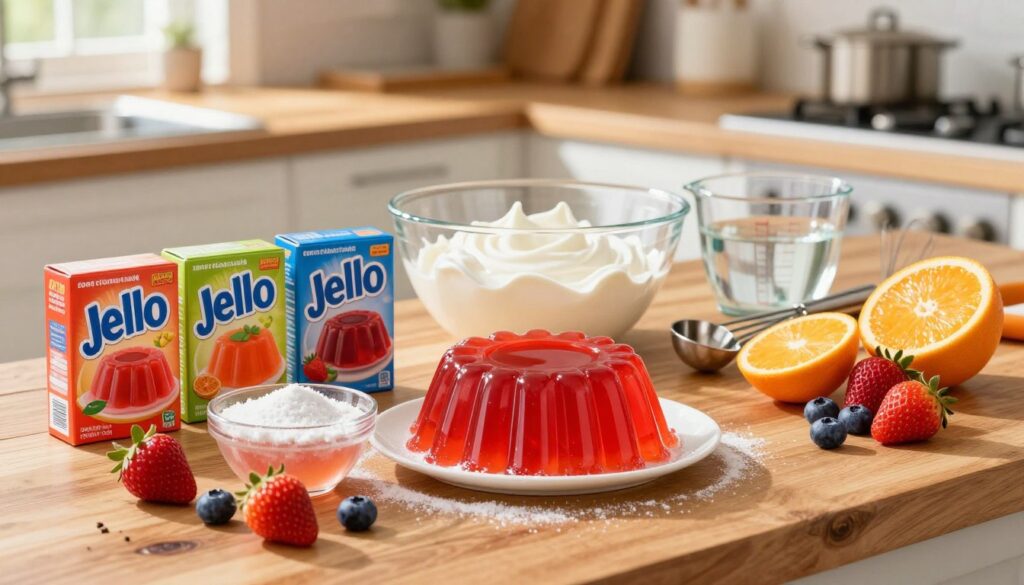
Gathering the right ingredients turns this nostalgic dessert into a fast, foolproof crowd-pleaser.
Cake base — Use one box of white or yellow cake mix, 3 large eggs, 1/2 cup oil, and 1 cup cold water. The box mix keeps things simple and still yields a tender, homey crumb. White cake mix tones down strong strawberry flavor for a strawberries-and-cream vibe; yellow gives a warmer color and richer mouthfeel.
Gelatin layer — One package flavored gelatin mixed in 1 cup boiling water, then stir in 1 cup cold water. Dissolving in boiling water first ensures a smooth, lump-free pour; adding cold water cools it fast so you don’t over-saturate the cake when you pour.
Topping and garnish
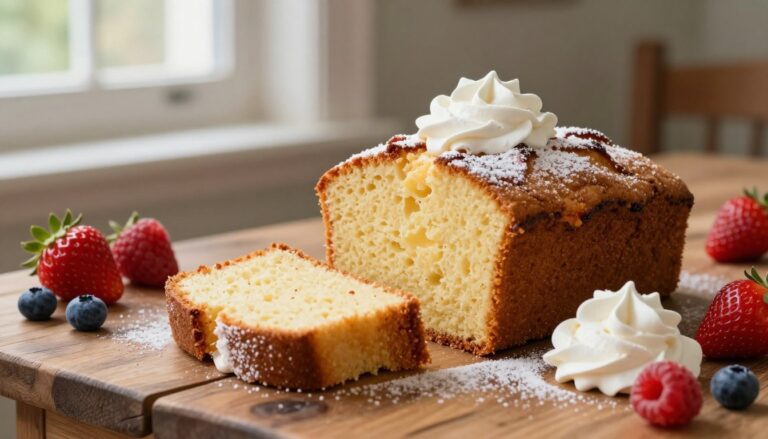
Top options: lightly sweetened whipped cream, Cool Whip, or a white chocolate whipped cream for a bakery-style finish. Garnish with fresh strawberries or fresh raspberries for color and bright flavor.
- Why eggs and oil? Eggs bind; oil keeps the cake moist after the gelatin soaks in.
- Why two waters? Boiling water dissolves the mix; cold water brings the temperature down quickly.
- Swaps: white vs. yellow box mix changes flavor balance and look—choose by how bright you want the strawberry notes to be.
| Layer | Main ingredients | Why it matters |
|---|---|---|
| Cake base | 1 box cake mix, 3 eggs, 1/2 cup oil, 1 cup water | Provides structure and a moist crumb that soaks up gelatin |
| Gelatin soak | 1 package flavored gelatin, 1 cup boiling water, 1 cup cold water | Creates the colorful, flavored streaks and moist interior |
| Topping | Whipped cream, Cool Whip, or white chocolate whipped cream; fresh berries | Adds creaminess and fresh finishing touch |
How to Make Jello Cake with Cake Mix
The foundation for a perfect poke-style dessert starts in the oven. Preheat to 350°F and spray a 13×9 pan so the batter releases cleanly.
In a large bowl combine the box mix with the water, eggs, and oil in that order. Whisk until smooth. Pour into the prepared pan and slide it into the preheated oven.
Prep and bake: oven temperature, pan spray, and bake time
Bake at 350°F for about 22–25 minutes—follow the package instructions as your final guide. Check doneness with a toothpick; it should come out with a few moist crumbs, not dry.
Cool time matters: letting the cake rest before adding gelatin
Cool in the pan about 30 minutes on a wire rack. The cake should be warm-ish, not piping hot, so the gelatin soaks instead of pooling at the edges.
- If the cake domes, level with a serrated knife while warm.
- If it browns fast, tent with foil for the last few minutes.
- Cracks? They usually hide under the topping—don’t worry, the texture stays great.
| Step | Why it matters | Quick note |
|---|---|---|
| Preheat oven to 350°F | Ensures even baking | Don’t open the door early |
| Bake 22–25 minutes | Keeps crumb tender for soaking | Follow box time range |
| Cool 30 minutes in pan | Prevents soggy bottom and overrun gelatin | Use a wire rack |
The Poke-and-Pour Method That Makes Jello Cake So Moist
A confident poke-and-pour turns an ordinary pan into a glossy, flavorful slab that slices like a dream. The trick is timing: poke when the cake is warm but not hot so it keeps structure and still soaks up flavor.
When to poke holes for the best soak
Use a toothpick for small, even holes or a fork for wider channels. Space holes roughly an inch apart and cover the entire top, not just the edges. That way every slice has bright streaks and consistent moisture.
How to mix gelatin so it pours evenly without clumps
In a bowl dissolve the gelatin fully in boiling water, then stir in cold water. This two-step approach guarantees a lump-free pour that sinks into the holes instead of sitting on the top.
Cover and chill: why it needs at least 6 hours in the fridge
Pour slowly and evenly over the surface so you don’t flood one corner. Cover with plastic wrap and chill a minimum of 6 hours, up to 12, so the flavored gel sets through the crumb. If you worry about wrap touching the surface, tent a sheet of plastic or use toothpicks to keep the plastic off the top while it chills.
Topping Ideas That Make This Dessert Shine
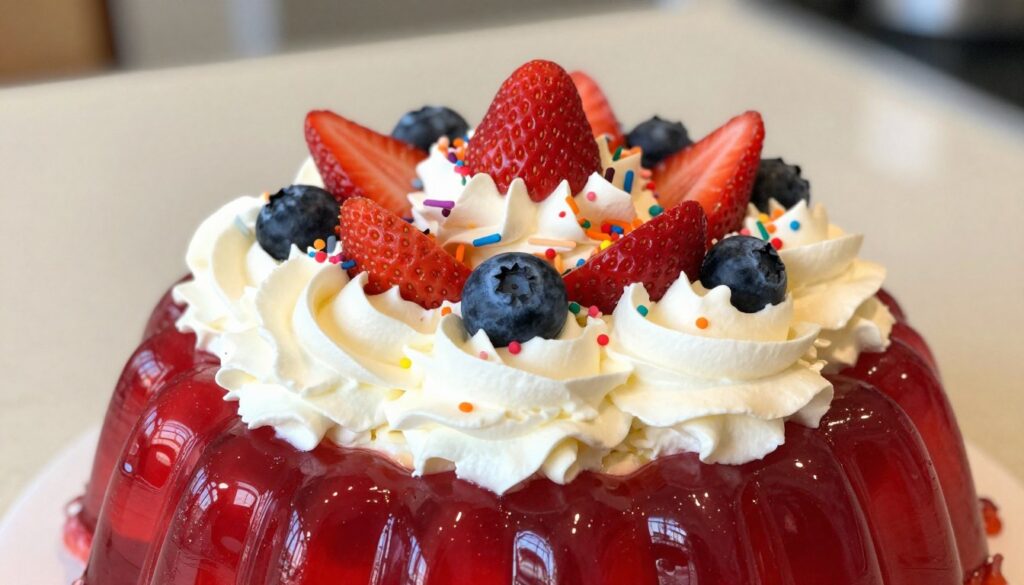
A smooth, creamy topping pulls this colorful pan into something that looks bakery-made with zero stress. I’ll walk you through a make-ahead showstopper and fast, no-fuss options so you can pick the vibe you want.
White chocolate whipped cream (make-ahead friendly)
Melt 4 ounces white chocolate chips with 1/4 cup warm heavy cream until glossy. Chill that mixture until cold, then whip it into 1 cup cold heavy cream with 1/2 teaspoon vanilla and 1 tablespoon sugar until soft peaks form.
Make this in advance while the pan chills; it keeps your timing easy and flavors meld beautifully. The white chocolate whipped cream is rich but still light, and it pairs perfectly with bright, fruity layers.
Quick option: lightly sweetened whipped cream or Cool Whip
If you need a fast finish, whip 1 cup cold cream with 1 tablespoon sugar in a cold bowl for a few minutes until soft peaks. Or use a tub of Cool Whip for an instant, stable top that holds up during transport.
How to spread the cream topping neatly on a chilled cake
Work on a well-chilled pan so the topping won’t sink. Dollop the cream across the top, then use a flat knife or offset spatula to make gentle swirls. Wipe the blade between passes to keep edges clean.
Pro tip: keep the topping even and about 1/2 inch thick so the colorful streaks remain the star when you slice and serve.
Flavor Variations: Strawberry, Cherry, Raspberry, and More
A bold gelatin hue sells the slice before anyone takes a bite. Vibrant flavors — strawberry, cherry, or raspberry — make bright streaks that show up in every serving and add obvious visual appeal.
Best gelatin colors for bold streaks and bright flavor
Choose high-contrast colors for the biggest “wow” factor. Strawberry and cherry give classic red tones; raspberry offers a deeper pink-red that photographs beautifully.
White cake mix vs. yellow cake mix for the flavor balance
White cake mix keeps colors true and lets fruit flavor shine. Use white cake if you want a strawberries-and-cream vibe with clean, bright notes.
Yellow mix adds warmth and a richer base flavor. It can mute pinks slightly and edge slices toward an orange tint.
| Mix | Look | Best for |
|---|---|---|
| White cake mix | Bright, clean | Fruit-forward, strawberries-and-cream |
| Yellow cake mix | Warmer, richer | Comforty flavors, golden color |
| Neutral | Depends on gelatin | Match to party theme |
Strawberries-and-cream style with fresh berries on top
For that summer-shortcake energy, use white cake, strawberry gelatin, and a fluffy white chocolate whipped cream on top. Finish with sliced strawberries for texture and a bright finish.
Can you use sugar-free gelatin?
Yes—sugar-free gelatin works, but brands vary. Chill fully so the set is firm; some sugar-free mixes need extra time to hold their streaks.
- Pairing idea: raspberry with white chocolate whipped cream.
- Party tip: mix colors for a layered, festive look.
Make-Ahead, Storage, and Transport Tips for Parties
Plan your chill time like a pro and you’ll arrive at the party calm and ready to serve.
I recommend chilling the pan at least 6 and up to 12 hours so the gelatin sets fully without the crumb getting mushy. That window gives the best texture and makes slicing tidy for guests.
Why keep it in the pan
Keep the dessert in the pan for transport. No flipping means no cracked top and no drama when you arrive.
The pan acts like built-in packaging—cover it and carry it flat for best results.
Storing leftovers the right way
- Wrap the pan tightly with plastic wrap so air can’t dry the surface.
- Refrigerate up to 48 hours; expect the cake to soften on day two.
- If you use a baking dish with higher sides, it reduces spills during the wrap step.
When to add the whipped topping
Add whipped cream or Cool Whip as close to serving as possible. If you top too early the cream can weep and the texture softens.
| Action | Timing | Why it helps |
|---|---|---|
| Chill in pan | 6–12 hours | Sets gelatin without soggy crumb |
| Wrap for travel | Right after chilling | Prevents spills and keeps surface fresh |
| Top with cream | Just before serving | Keeps topping fluffy and stable |
Travel smart: keep the pan level, carry it in a shallow box, and bring a sharp knife or serving spoon. For extra confidence, read these tips on how to transport desserts before you go: transport desserts.
Serve It Cold and Watch It Disappear
Serve this pan cold and you’ll see how a simple cake becomes the star of the table. Cold improves texture and flavor, so keep it in the fridge until just before you cut.
For neat squares, use a hot, sharp knife and wipe the blade between cuts. That keeps those colorful streaks tidy and makes each slice photo-ready.
Finish right before serving: one extra swirl of whipped cream or Cool Whip, a scatter of berries, or a few white chocolate shavings on top. Small touches make a big impression.
Portion tip for a 9×13: cut 12–15 generous squares for a crowd, or 20 smaller pieces if you want leftovers. And the simple method to remember: bake, cool, poke, pour, chill, top — then watch it disappear.