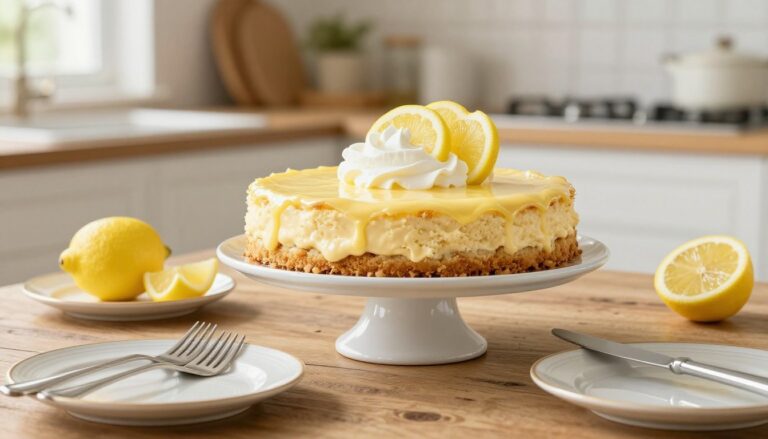

Honey Bun Cake Recipe
I love a dessert that doubles as breakfast. This cozy cinnamon-sweet treat tastes like the packaged honey bun without fussing with yeast.
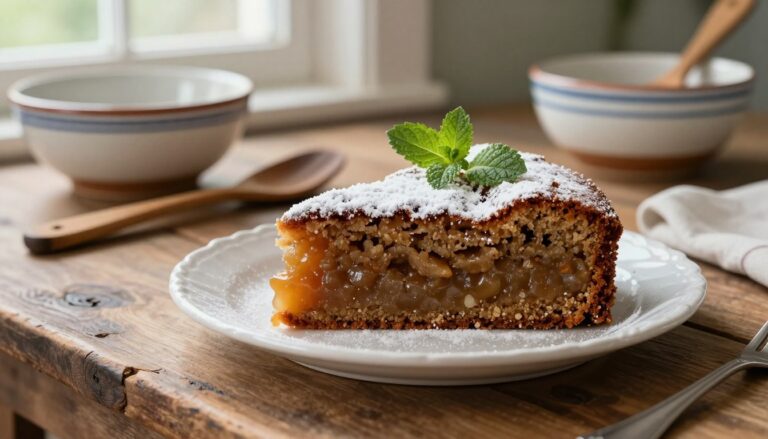
The base is a soft yellow cake with a gooey cinnamon-sugar layer and a simple vanilla glaze that melts into the top. It feels nostalgic and coffee-shop ready.
You’ll get options here: a classic 9×13 pan or a half-sheet to feed a crowd, plus smart storage and make-ahead tips so it stays fresh for days.
Quick technique: spread half the batter, sprinkle the cinnamon-brown sugar swirl, then finish with the rest of the batter. Glaze while warm for that signature finish.
Timeline snapshot: mixing ~15 minutes, baking ~30–35 minutes, cooling ~10–15 minutes. That helps you plan without hovering by the oven.
What Makes Honey Bun Cake So Irresistible
Imagine a sticky cinnamon pastry turned into an easy, sliceable sheet you can serve straight from the pan. I love how the nostalgia hits without the fuss of yeast or frying.
Flavor vs. Its Cousin
The honey bun cake leans sticky-sweet and pastry-like. By contrast, a cinnamon roll cake tastes more like frosted, yeasted rolls — similar neighborhood, different house.
Texture Goals
Think moist yellow cake crumb under a crumbly, cinnamon-sugar layer that melts a bit when the warm glaze lands on top. Brown sugar adds that deep, caramel warmth that makes you cut a second slice.
When to Serve and Pairings
Perfect for brunch spreads, potlucks, holiday breakfasts, or an after-school snack attack. I often serve it with coffee, a tall glass of milk, or a scoop of vanilla ice cream for dessert.
- Sticky-sweet pastry flavor without frying
- Cinnamon-forward center with a gooey finish
- Simple, crowd-pleasing bun cake format
| Type | Flavor note | Best with |
|---|---|---|
| Honey bun cake | Sticky cinnamon & brown sugar | Coffee |
| Cinnamon roll cake | Frosted, yeasty | Milk |
| Yellow sheet | Moist, tender crumb | Ice cream |
Honey Bun Cake Recipe Ingredients You’ll Need

Pick your path: box mix speed or from-scratch control, and the rest falls into place.
For a fast half-sheet version use 1 box yellow cake mix plus pantry add-ins listed below. The boxed route keeps prep quick while sour cream and melted butter boost moisture and flavor.
- Moisture boosters: sour cream (richness), eggs (structure), milk (tender crumb), melted butter (bakery flavor). Room temperature dairy and eggs make a smooth batter.
- Filling: cinnamon + brown sugar mixture (1 cup brown sugar + 2 tsp cinnamon) — sprinkle as a layer or swirl for even cinnamon hits.
- Glaze: powdered sugar + milk + vanilla (2 cups powdered sugar, 3 Tbsp milk, 1 tsp vanilla) — whisk and pour over warm cake for that glossy icing finish.
Half-sheet ingredient quantities (boxed mix)
| Ingredient | Amount | Use |
|---|---|---|
| Yellow cake mix (box) | 1 box | Batter base for half-sheet |
| All-purpose flour | 1 cup | Stabilizes batter |
| Granulated sugar | 1/2 cup | Sweetness and structure |
| Eggs | 4 | Structure and lift |
| Sour cream | 1 cup | Moisture booster |
| Vanilla | 1 Tbsp | Flavor |
| Water | 1/2 cup | Hydration |
| Melted butter | 3/4 cup | Flavor and tender crumb |
Smart swaps: use oil instead of butter to keep crumb softer if needed. For from-scratch 9×13 builds, match flour and sugar to the listed ratios, add baking powder and salt, then include the same moisture boosters.
Equipment and Pan Options for This Bun Cake
Choosing the right pan and tools sets you up for a perfect batch every time. I’ll walk you through pan size, mixing choices, and a few prep bits that really matter.
Pan choice: 9×13 vs. half sheet
Use a 9×13-inch pan for thicker squares and slower, gentler baking (about 40–45 minutes at 325°F). A half sheet (18″x13″x1) gives thinner, party-friendly slices and bakes faster — roughly 25–28 minutes at 350°F.
Light-colored pans brown more evenly; dark pans speed browning, so shave a few minutes to avoid dry edges. Pan depth changes how the batter heats, so pick your texture game: tall or thin.
Mixing setup: stand mixer or bowl
A stand mixer speeds things up and keeps hands free. But a simple bowl and spatula work perfectly fine and cut dishes.
Either way, scrape the sides so the cake batter blends smooth. Use a small bowl for the cinnamon-sugar mix to keep spills contained.
Prep essentials and the toothpick test
Grease or spray the pan so the top lifts clean. A rubber spatula spreads batter smoothly and helps cover the filling.
For doneness, insert a toothpick in the center. You want it to come out clean or with a few moist crumbs — not wet batter. That tells you it’s ready.
| Tool | Why it matters | Notes |
|---|---|---|
| 9×13 pan | Thicker slices, gentler bake | 325°F, 40–45 min; taller squares |
| Half sheet (18″x13″x1) | Party-friendly, faster bake | 350°F, 25–28 min; thinner slices |
| Stand mixer | Fast, hands-free mixing | Great for smooth cake batter |
| Bowl & spatula | Simple, fewer dishes | Use a small bowl for the cinnamon mix |
| Toothpick | Doneness check | Comes-clean = done; avoid wet batter |
Prep Work Before You Mix the Cake Batter
Start smart: get the oven and pan ready so your cake bakes evenly and glazes like a dream. A quick setup prevents rushed moves when the batter is ready.
Choose the right temperature
For a half sheet, preheat oven to 350°F so thinner slices brown in the right time. For a taller 9×13, set 325°F so the center bakes through without overbrowning.
Preheat early—an oven that’s fully hot gives the batter a confident rise and better texture. Aim to finish your prep while the oven reaches temp.
Pan prep and the sugar mix
Grease the pan generously with baking spray, paying special attention to corners so the sugar layer doesn’t stick. Trust me: that cinnamon-sugar can cling like it pays rent.
Mix the brown sugar and cinnamon in a small bowl before you start. Having the sugar mixture ready keeps assembly tidy and fast.
- Set eggs and dairy out to reach room temperature (20–30 minutes).
- Measure glaze ingredients and the sugar mixture ahead of time.
- Have your bowl and spatula handy so you can spread batter without stopping.
| Task | Why it matters | Quick note |
|---|---|---|
| Preheat oven | Even bake and proper rise | 350°F half sheet / 325°F 9×13 |
| Grease pan | Prevents sticking of sugar layer | Spray corners well |
| Mix sugar mixture | Ready to layer when batter is spread | Use a small bowl |
How to Make Honey Bun Cake Step by Step
Get your mixing bowl ready and let’s turn those pantry staples into a tender, cinnamon-studded sheet. I use a quick, confident rhythm so the batter stays tender and the brown sugar layer stays gooey.
Mix until just smooth
Beat the cake batter about 3 minutes for a half sheet (boxed or from-scratch). Stop when no streaks remain—overmixing tightens the crumb and makes it dense.
Layering the filling
Pour half batter into the prepared pan. Sprinkle the cinnamon and brown sugar mixture evenly across that half layer.
Finish the top
Spoon the remaining batter in dollops over the sugar layer. Then gently spread to cover so the batter top holds the filling in place. If a little cinnamon peeks through, no worries.
Optional swirl method
For ripples through the whole sheet, drag a knife through the batter top in a few sweeping motions. Keep it light—too much swirls drags the filling thin.
- Tip: thick-but-spreadable batter is correct—don’t expect pancake-thin pourability.
- Half-sheet beats about 3 minutes; from-scratch aim for a spreadable texture.
| Method | Action | Why it works |
|---|---|---|
| Half sheet | Beat 3 minutes, layer half, sprinkle, top | Fast, even cinnamon pockets |
| 9×13 | Thicker batter, same layering | Taller squares, gentler bake |
| Swirl | Knife through top layer | Cinnamon ripples in every bite |
Baking Time, Doneness Cues, and Glazing

Timing and oven habits make the difference between a gooey smash and neat, bakery-style squares.
Bake time by pan
Half-sheet pans bake faster: expect about 25–28 minutes at 350°F. A 9×13 pan takes longer—roughly 40–45 minutes at 325°F.
| Pan | Temp | Minutes |
|---|---|---|
| Half sheet | 350°F | 25–28 |
| 9×13 | 325°F | 40–45 |
| Dark vs. light pan | Adjust temp | Check a few minutes early |
Doneness cues
Look for a golden top and set edges. Insert a toothpick in the center—if it comes clean or with a few moist crumbs, you’re good. Wet batter means more oven minutes.
Make the glaze
Whisk powdered sugar with a splash of milk and a little vanilla until smooth. Pour or spread the glaze over warm cake so it melts into a thin, glossy layer.
Cool completely for tidy squares. If you love gooey slices, serve after a short rest—but expect messier pieces. The cake already has sugar in the batter and the cinnamon layer, so go easy on extra icing unless you want it very sweet.
- Tip: dark pans brown faster—start checking early.
- Serve within a few days for best texture.
- Use a sharp knife and steady cuts for clean squares.
Recipe Tips and Easy Variations
A few simple swaps and a tiny extender trick let you stretch a single box into a party-sized half sheet without losing texture.
Using a yellow cake mix extender
If one yellow cake mix won’t fill a half pan, don’t double blindly. Add about 1 cup flour and 1/2 cup sugar plus an extra egg and 1/4 cup milk to the original box batter. That boosts volume without making the batter too heavy.
Butter vs. oil and flour choices
Butter gives the best flavor; oil yields a slightly softer crumb. Swap them freely depending on pantry or preference.
| Choice | Effect | Use when |
|---|---|---|
| Butter | Richer, more bakery-like | Flavor first |
| Oil | Moister, tender crumb | Make-ahead or softer slices |
| All-purpose flour | Reliable structure | Everyday baking |
| Cake flour | Lighter, airy crumb | Delicate, bakery-style |
Add-ins and serving-warm tips
Fold chopped pecans or walnuts into the cinnamon mixture for crunch and contrast. Use about 3/4 cup so the swirl still spreads.
To revive warm, gooey slices: microwave single pieces 10–12 seconds, or heat several at 300°F for 6–8 minutes. A quick warm-up brings back that melty center.
- Store covered at room temp or in the fridge—best within 4–5 days.
- Freeze wrapped slices up to 3 months; thaw overnight in the fridge.
- Small tweaks (sour cream, a bit more sugar, or a splash of milk) change texture by a tasty bit—experiment!
Serve, Store, and Enjoy Every Last Slice
Bring the pan to the table and let everyone pick a gooey slice while the glaze still shines. Warm squares pair beautifully with coffee, a cold glass of milk, or a scoop of vanilla ice cream for dessert mode.
Store leftovers covered in the same pan or in an airtight container at room temperature for about 4–5 days. For longer keeping, freeze wrapped slices in a freezer-safe container up to 3 months; thaw overnight in the fridge.
To revive the top and glaze, warm single pieces 10–12 seconds in the microwave or heat several at 300°F for 6–8 minutes. Make it your own—add nuts, swirl more cinnamon, and bookmark this recipe for brunch, holidays, or snack emergencies.