Biscoff Cake Recipe
I’ll open with what you came for: a Biscoff Cake Recipe that tastes like cozy caramel-spice cookies upgraded into a soft, moist treat. It’s dreamy, not fussy, and built to impress whether you bake from scratch or cheat a little with a mix.
My goal here is simple: tender crumb, no dry bites, and a clear warm spice thread through batter, glaze, and toppings. I’ll also share the secret weapon—just a splash of brewed coffee—to deepen the caramel notes without turning this into a coffee dessert.
You’ll get a short roadmap so you can jump in: ingredients, mixing order, doneness cues, frosting and drip ideas, plus storage tips. I’ll preview three easy paths: a low-stress Bundt for drama, a layer option for a showstopper, or a 9×13 for the least cleanup.
This is perfect for gatherings and gifts—slices cleanly, keeps well, and honestly tastes better the next day. Ready? Let’s bake something that feels like a warm hug in dessert form.
What Makes Biscoff So Good in Cake
Let’s unpack why this caramel-spice cookie and its spread work so well in batter.
Lotus speculoos cookies and the spread, explained
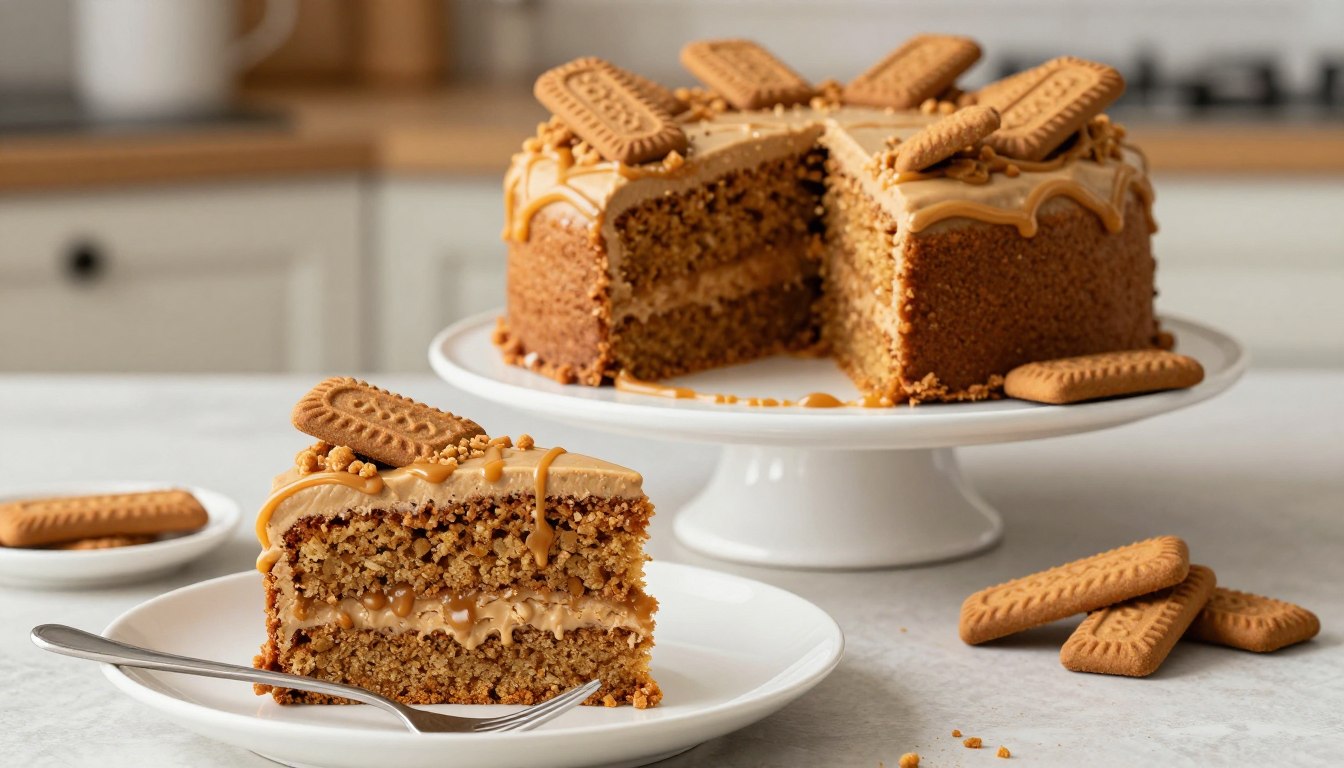
Lotus made a spiced, caramelized speculoos-style cookie that’s thin and crunchy. The whole biscoff cookies give crunch, aroma, and a nice garnish when crushed on top.
They also turned that same cookie into a smooth jar of cookie butter. That spread brings fat, sugar, and emulsified cookie magic. It melts into batter and keeps the crumb tender and rich.
The caramel-spice profile and why it tastes cozy
The overall flavor reads as warm caramel with cinnamon-like spice. It sits in the same family as spice cakes and gingerbread, so it feels familiar and homey.
Vanilla plays a supporting role here—quiet, but it lifts the cookie butter and spices so they taste fuller and less one-note.
The coffee trick that deepens taste
Stirring in a cup of room-temperature brewed coffee deepens those caramel-spice notes without turning the batter into a coffee dessert. If you avoid coffee, plain water works, though the depth will be milder.
- Whole cookie = crunch + topping power
- Cookie butter = moisture, richness, spreadable flavor
Biscoff Cake Recipe Ingredients and Equipment

Start with smart prep: the right pan and measured ingredients make all the difference.
I recommend three pan options: a 10-inch Bundt for drama, a 9×13 for easy serving, or two 8–9″ rounds for layers. For a Bundt, grease generously and lightly flour every groove so the cake releases cleanly.
Dry ingredients and why they matter
Spoon and level the flour into the cup to avoid a dense crumb. Combine flour with baking soda, a pinch of salt, and cozy spices—cinnamon, a small teaspoon of cloves, and nutmeg—so flavor disperses evenly.
Wet ingredients and textures
Use unsalted butter for flavor plus a splash of oil to keep the crumb soft over days. Cream sugar and butter until light, then add eggs and vanilla extract for structure and lift.
Moisture boosters and cookie butter handling
Buttermilk adds tenderness; cooled brewed coffee brings depth without making this a coffee dessert. Measure cookie butter by cup; gently warm it so it pours for swirls or a drizzle. Warm, not hot, helps it fold into batter without clumps.
Essential equipment
- Stand mixer or hand mixer for even creaming
- Two bowls (one for dry, one for wet) and a spatula
- Accurate measuring cups and spoons; a bench scraper or offset spatula helps with pan filling
| Pan | Best use | Prep tip |
|---|---|---|
| 10-inch Bundt | Showpiece | Grease + flour every groove |
| 9×13 | Feed a crowd | Line with parchment for easy lift |
| Round layers | Frosting drama | Chill layers before stacking |
Step-by-Step Method for a Moist, Tender Crumb
Set your oven to 350°F and follow these steps for a moist, tender crumb every time. This section walks you through timing, mixing order, and simple checkpoints so baking feels calm, not frantic.
Oven temperature, timing, and doneness
Preheat to 350°F and bake on the middle rack. A 10-inch Bundt will take about 45–50 minutes; a 9×13 needs less time per depth, and round layers bake faster per layer.
Insert a toothpick near the center. “Comes clean” can mean truly clean or with moist crumbs—wet, glossy batter is not done.
Mixing order and technique
Beat butter + oil + cookie butter until smooth. Add sugars and beat until fluffy. Add eggs one at a time, then vanilla.
Alternate adding dry ingredients with buttermilk and room-temperature brewed coffee. This prevents overmixing and keeps batter tender. Stop when flour streaks vanish.
- Scrape down bowl sides between additions.
- Fill the pan evenly, tap to release air bubbles, smooth the top.
- Bake on the middle rack and check at the shorter end of the time range.
| Pan | Approx. minutes | Prep tip |
|---|---|---|
| 10-inch Bundt | 45–50 | Grease + flour grooves |
| 9×13 | 30–40 | Line with parchment |
| 8–9″ rounds | 25–35 | Chill layers before stacking |
Cooling and final checkpoints
Cool in the pan for about 15 minutes, then loosen the sides with a knife and invert onto a rack. Make sure the cake releases cleanly—if it sticks, let it cool a few minutes more.
For more tips on timing and finishes, see this handy guide: detailed method and tips.
Frosting and Glaze Options That Highlight Cookie Butter

Choose a finish that matches your mood—quick glaze, bakery-style buttercream, or a playful cookie butter drip. Below are three clear routes so you can pick based on time and the look you want at the top.
Caramel-style glaze that firms up for easy slicing
Make a simple caramel glaze by melting butter with cookie butter and a splash of buttermilk, then whisk in powdered sugar until it thickens. Add a pinch of salt to balance sweetness and a touch of vanilla extract to round the flavor.
A glaze that firms up is ideal for clean slices and gifting. Chill briefly to set so the top isn’t sticky when you package or stack halves for transport.
Cream cheese buttercream for layer cakes and sheets
For a bakery-style finish, beat cream cheese with butter, powdered sugar, and vanilla. Adjust thickness with a tablespoon of milk until the texture pipes smoothly.
This frosting pairs beautifully with cookie butter between layers. Pipe a small dam around each layer, spoon the filling into the center, then stack to prevent blowouts.
Cookie butter drip: test, temperature, and technique
Warm cookie butter gently—slightly warm and fluid, never hot. Transfer to a squeeze bottle or piping bag and do one test drip on the side of a chilled cake to confirm the flow.
Too warm will melt the frosting and slide to the board; too cool won’t drip. Aim for a slow, controlled drip and finish with crushed cookies on the top and pressed around the sides for polish.
- Quick route: sheen glaze that firms for neat slices.
- Fancy route: cream cheese buttercream with a cookie butter filling.
- Showy route: warm drip, test first, then decorate with crushed cookies and cookie halves.
| Finish | Best use | Key tip |
|---|---|---|
| Firm glaze | Gifting, clean slices | Chill briefly to set |
| Cream cheese frosting | Layered presentation | Pipe a frosting dam |
| Cookie butter drip | Decorative showpiece | Test drip; keep slightly warm |
Easy Variations for Every Schedule and Pan Size
Whether you have all afternoon or exactly one hour minutes, there’s a version that fits. Swap pans, tweak timing, and keep the core batter the same so flavors stay consistent.
Spiced Bundt version with a cookie butter glaze
Make a warmly spiced batter, bake in a greased and floured 10-inch pan for about 45–50 minutes. Warm the biscoff cookie butter gently and whisk with a touch of butter and vanilla for a thick glaze.
Layered drip cake with cookie butter filling
Level two round layers, pipe a frosting dam, spoon in chilled cookie butter filling, then crumb coat and chill. Test a single-ingredient drip on the side before adding it slowly to the top edge.
Quick 9×13 boxed-mix shortcut and swirl method
Upgrade a boxed mix: swap water for milk, replace oil with double melted butter, and add one extra egg. Pour batter into a greased 9×13, microwave about 30 seconds of cookie butter to loosen, drizzle over, and swirl. Bake ~30–32 minutes at 350°F.
- Pan prep: 9×13 greased bottom only; Bundt fully greased + floured.
- Timing: check center with a toothpick at the lower end of the minutes range.
- Vanilla belongs in the batter and the glaze to lift that bottled mix flavor.
| Variation | Pan | Bake time |
|---|---|---|
| Showpiece Bundt | 10-inch Bundt | 45–50 minutes |
| Layered drip | Two 8–9″ rounds | 25–35 minutes per layer |
| Quick sheet | 9×13 | 30–32 minutes |
Serve, Store, and Enjoy Every Last Slice
Serve slices at room temperature so every spice and buttery note sings. Cold cake mutes flavors and firms the crumb; gentle warming brings back perfume and softness.
This is a next-day superstar—the spices settle and the cookie butter notes pop after an overnight rest. For day-to-day, keep the cake in an airtight container at room temp for 3–4 days.
If you used cream cheese frosting or need longer keeping, refrigerate up to 6 days. Let slices come back to room temp before serving to avoid a dry, firm bite.
To freeze: wrap individual slices in plastic, then foil, label and freeze up to 2 months. Thaw overnight in the fridge and warm briefly (10–15 seconds) if you want a glossy top. If the glaze firms or crumbs soften, a quick warm-up and fresh cookie crumbs fix it. Add an extra swipe of frosting or a spoon of cookie butter on the side—joy is the goal!