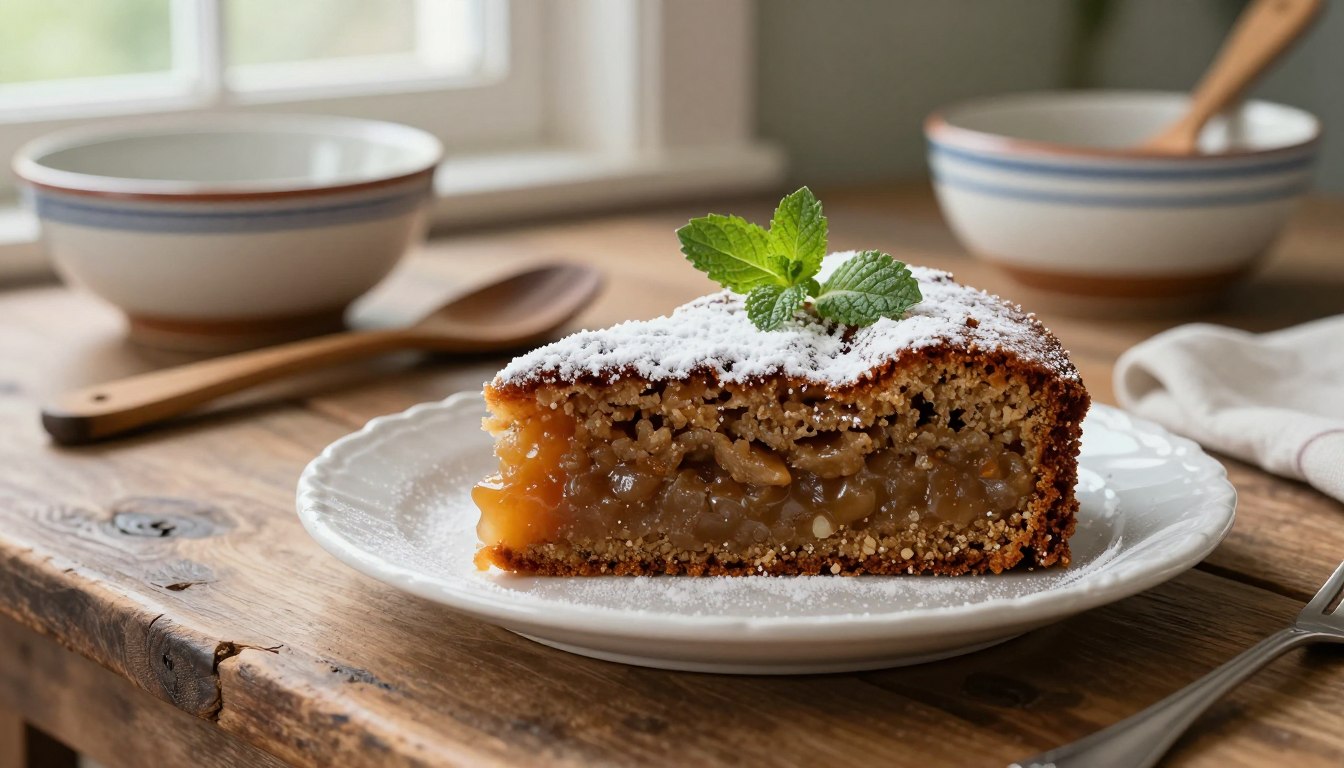
Amish Applesauce Cake Recipe
I bake this applesauce cake when I want something that feels like a warm hug. Spiced with cinnamon and nutmeg, it stays moist and tender, and a few chopped nuts are optional if you like a little crunch.
This is a from-scratch recipe that fits a weekday or a small gathering. The steps are straightforward, with tested cues so you won’t need any fancy bakery tricks.
People often slice it for breakfast with coffee, yet it stands proud as a proper dessert when you dress it up. You can keep it plain or give it a glossy caramel finish — both are winners.
Use a 9×13 pan for crowd-pleasing squares, or a bundt/tube pan for a prettier presentation. I’ll walk you through both, with timing tips and simple swaps so you can work with what’s in your kitchen.
Why This Old-Fashioned Applesauce Cake Is So Moist and Cozy
Applesauce is the secret weapon here — it lightens the crumb while cutting some fat, so the cake stays soft and fresh for days. The fruit’s water content keeps moisture locked in, and its mild sweetness means you need less added sugar.
Applesauce for moisture and texture
When I swap part of the butter with applesauce, the batter gains body without becoming heavy. That fiber helps the crumb hold onto liquids, which improves texture and shelf life.
Warm spice profile
I lead with cinnamon, then add a touch of cloves and allspice to deepen the flavor. A pinch of nutmeg is optional for a gentle lift (use it sparingly so the spices stay cozy, not overpowering).
Crunch factor: walnuts, pecans, or none
Walnuts give an earthy bite; pecans add buttery sweetness. Skip nuts entirely if you want a nut-free loaf or to highlight a pure apple note.
| Add-in | Crunch | Best for |
|---|---|---|
| Walnuts | Moderate, slightly bitter | Rustic texture and balance to sweet batter |
| Pecans | Buttery, softer crunch | More caramel-like flavor, dessert-style slices |
| No nuts | None | Nut-free households; lets apple flavor shine |
Small swaps—like adding frozen cherries or dialing spices up a notch—let you make this applesauce cake your own for breakfast, snack time, or an after-dinner treat.
Ingredients You’ll Need for Amish-Style Applesauce Cake
Start with pantry basics and a good jar of applesauce, and you’ll be halfway to a tender, spiced loaf. Below I list the wet team, the dry team, and fun mix-ins so you can measure confidently and bake without guessing.
Wet ingredients
- 1/2 cup butter — adds richness and helps tenderize the crumb.
- 1 cup sugar + 1/2 cup brown sugar — for sweetness and deep flavor.
- 1 cup applesauce — supplies moisture and apple flavor without extra fat.
- 1 large egg + 1 egg yolk — give structure so the loaf won’t crumble.
- 1/4 cup milk — adjusts batter consistency if needed.
Dry ingredients
- 2 cups flour, 1 teaspoon baking soda, 1 teaspoon baking powder, 1 teaspoon salt.
- 2 teaspoons ground cinnamon, 1/2 teaspoon ground cloves, 1/4 teaspoon nutmeg and 1/4 teaspoon allspice.
- Why both leaveners? Baking soda reacts with the applesauce and brown sugar, while baking powder adds extra lift for a taller, tender crumb.
Mix-ins and notes
- 1 cup chopped walnuts or pecans (optional) or 1/2–3/4 cup raisins for chew and contrast.
- Some versions fold in stewed apple pieces for soft fruit pockets under a glaze.
- Measuring tip: spoon flour into the cup and level with a knife; use a teaspoon for spices to keep balance.
For the best results, choose homemade applesauce or unsweetened store-bought. Heavily sweetened or flavored varieties can throw off the balance. For the full step-by-step version, see the full step-by-step version.
Kitchen Tools and Pan Options That Work Best
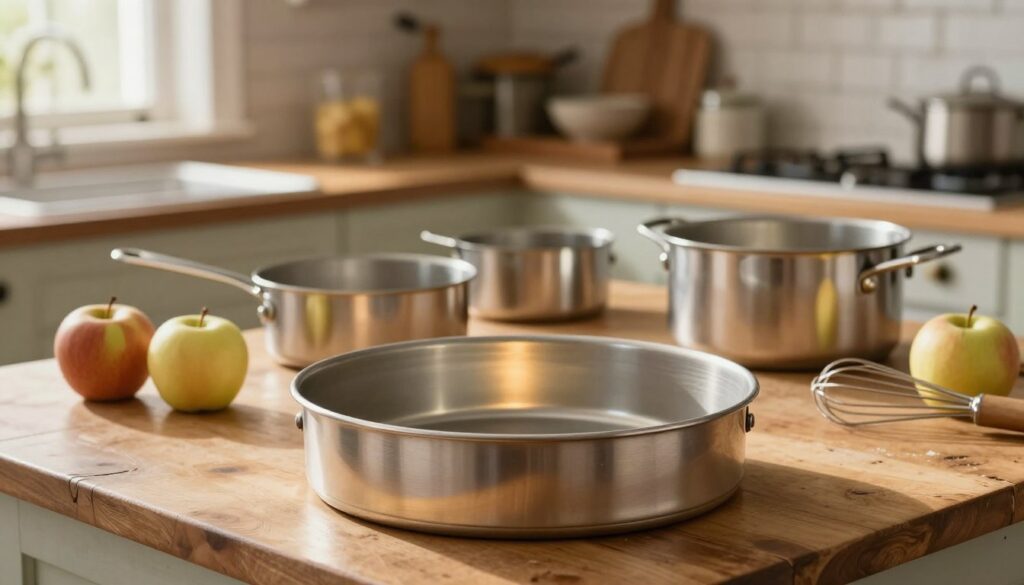
Choose your pan early—its shape decides how the batter bakes and how long it needs in the oven.
9×13, bundt, or tube — pick the vibe
A 9×13 pan makes casual, snackable squares for coffee or lunchboxes. It bakes faster and gives thin, even slices.
A bundt pan turns the loaf into a pretty ring for company. A tube pan keeps a tall, classic profile that feels traditional.
Grease, flour, and no-drama release
Grease and flour every nook on bundt or tube pans. For extra insurance, dust with sugar instead of flour for a light crust.
Let the cake rest about 10 minutes after baking, then invert gently. Parchment on the bottom helps with tube pans and prevents a crumb pile.
- Tools to keep on hand: mixing bowls, whisk or mixer, spatula, and a reliable timer.
- Adjust bake time for deeper pans—taller batter needs longer in the oven to reach the right temperature inside.
- Cool on a rack to room temperature before slicing so the crumb sets and you get clean pieces.
| Pan | Best for | Bake notes |
|---|---|---|
| 9×13 | Everyday slices | Shorter time, even browning |
| Bundt | Party presentation | Grease well; dust with flour or sugar |
| Tube | Classic tall loaf | Use parchment on bottom; allow rest before inverting |
Amish Applesauce Cake Recipe
Before you touch flour, set the oven to 350°F and gather the bowls; good organization makes better batter. A short intro keeps you calm and helps the process move smoothly.
Preheat oven to 350°F and prep your pan
Preheat oven to 350°F (oven 350) so it’s at the right temperature when your batter is ready. For a 9×13, spray or line the pan; for a bundt or tube, grease well and dust with flour or sugar.
Cream butter and sugars until fluffy
Cream room-temperature butter with sugar until light and fluffy. This traps air and gives the cake a lighter texture.
Add egg, applesauce, and milk
Beat in the egg (and extra yolk if using), then add applesauce and a splash of milk. The batter will look moody at first—that’s fine.
Whisk dry ingredients and mix just until combined
Whisk flour, baking soda, baking powder, salt, and ground cinnamon in a bowl. Fold dry mix into wet just until no streaks remain; don’t overmix or the crumb will be tough.
Fold in walnuts/pecans and optional raisins
Gently stir in walnuts, pecans, or raisins so they spread evenly through the batter. Toss nuts in a teaspoon of flour first to prevent sinking.
Bake times and doneness cues with a toothpick test
Bake about 40 minutes for a 9×13, or 50–60 minutes for a bundt (time varies by oven). Insert a toothpick—few dry crumbs = done; wet batter = more minutes.
Cooling tips for the best crumb and clean slices
Let a bundt rest 10 minutes before inverting. Cool on a rack to room temperature before slicing; the crumb sets and you get neat pieces.
| Pan | Bake Time (minutes) | Doneness Cue |
|---|---|---|
| 9×13 | 35–45 | Toothpick shows a few dry crumbs |
| Bundt/Tube | 50–60 | Toothpick near center comes out clean |
| Smaller loaf/pans | 30–40 | Top springs back; toothpick clean |
Caramel Glaze Topping for an Extra-Decadent Finish
The easiest way to make this loaf feel special is a buttery, brown-sugar glaze poured on top. It’s optional, but wildly good when you want a bakery-style finish that sings with warm spice and extra sweetness.
Simple glaze ingredients and why they matter
Use butter and brown sugar for richness and deep caramel notes. Stir in heavy cream and a splash of vanilla for smoothness and balanced flavor. A pinch of salt brightens the whole thing.
Quick stovetop method and timing
Melt butter with brown sugar and 1/4 cup cream. Simmer gently 2–3 minutes (don’t boil hard), then remove from heat and stir in vanilla and salt. For extra fruit, fold in a few spoonfuls of stewed apples for apple-forward applesauce moments.
When to glaze and how to fix consistency
Pour warm glaze over a slightly cooled cake so it soaks in without turning soggy. If the glaze firms up too much, stir in a teaspoon of cream or milk to loosen it.
| Ingredient | Role | Adjustment Tip |
|---|---|---|
| Butter | Adds richness and sheen | Use unsalted; add pinch of salt if needed |
| Brown sugar | Provides caramel depth | Light or dark alters flavor intensity |
| Cream | Controls texture and pourability | Add by teaspoon to thin glaze |
Other Topping Ideas That Keep It Classic
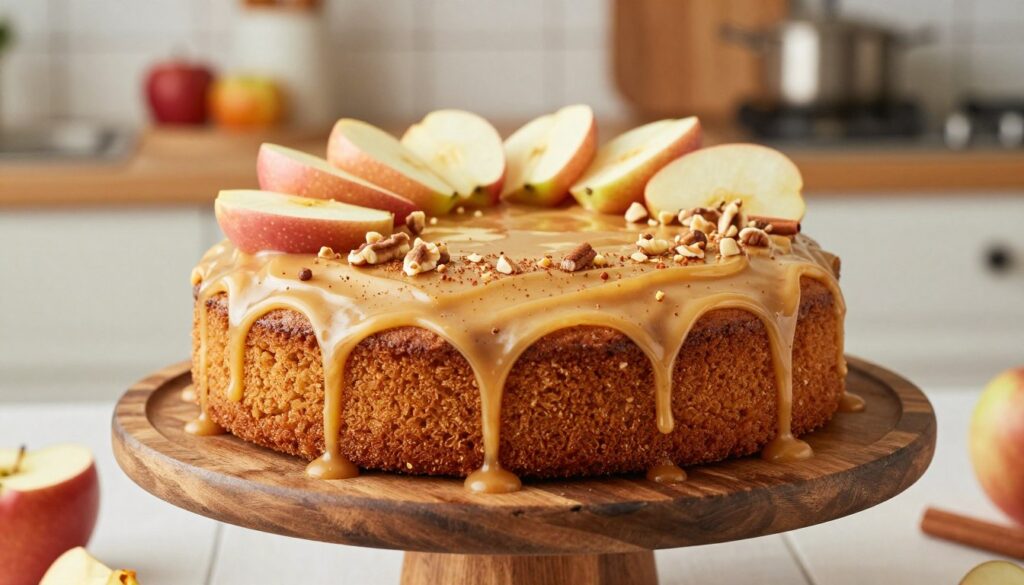
A simple topping can lift this loaf from homey to show-stopping in seconds. I like finishes that highlight the warm spice and tender crumb instead of hiding them.
Powdered sugar dusting
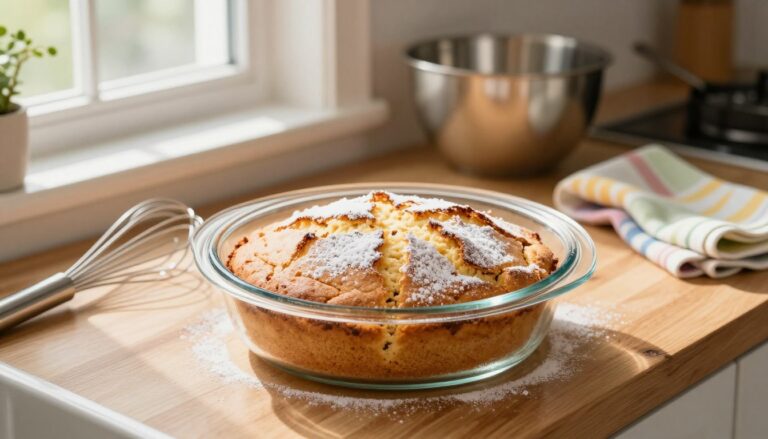
For a bakery-style look with almost no work, lightly sift powdered sugar over the top. Do it after the loaf cools so the sugar won’t melt into the surface.
Cinnamon cream cheese or buttercream
Want richer flavor? Whip a quick cinnamon cream cheese frosting in a bowl with cream cheese, butter, powdered sugar, and a pinch of cinnamon.
Or make a classic buttercream for sweet, swoopy swirls—great for special occasions and celebrations.
- When to dust: wait until cooled, then sift for a delicate finish.
- Mixing tip: use a bowl and a hand mixer, or whisk by hand for a rustic feel.
- Match the topping to the event—brunch needs light, potluck loves rich icing.
| Type | Best for | Quick tip |
|---|---|---|
| Powdered sugar | Everyday slices | Sift after cooling |
| Cinnamon cream cheese | Cozy brunch | Beat until smooth |
| Buttercream | Party presentation | Pipe for drama |
Honestly, this cake is delicious plain—especially with coffee. Pick a top that fits your mood and enjoy.
Flavor Variations and Add-Ins to Make It Your Own
A few smart swaps can turn this familiar loaf into a new weekend favorite. Try one change at a time so you learn what each add-in does to texture and taste.
Walnuts vs pecans: pick your crunch
Walnuts feel rustic and toasty; they add an earthy bite that balances sweetness. Pecans are sweeter and buttery, which makes slices feel richer and more dessert-like.
Fruit swaps: raisins, cranberries, or frozen cherries
Raisins are classic and mingled, giving chew without overt tartness. Dried cranberries add bright tang. Frozen cherries give juicy, fruity pockets—toss them in briefly with a dusting of flour so they don’t sink.
- Use 1 cup total for nuts or 1/2–3/4 cup for dried fruit to keep the batter stable.
- If combining fruit and nuts, lower each to 2/3 cup so the loaf holds together.
- Fold add-ins gently to avoid overmixing the batter.
Spice swaps and fresh ground advantage
For deeper warmth add a little more cloves or allspice. Nutmeg (fresh ground) gives cozy sweetness; a pinch of cardamom or ground ginger gives that “what is that?” lift.
Tip: fresh ground spices pop more than extra teaspoons of old, dusty jars. If you want a bold shift, increase a single spice by 1/4 to 1/2 teaspoon and taste the idea in your head before dumping it in.
| Add-in | Effect | Guide |
|---|---|---|
| Walnuts | Earthy, rustic crunch | 1 cup, toss with flour |
| Pecans | Buttery, sweeter bite | 1 cup, use halves for texture |
| Dried fruit / cherries | Tangy or juicy pockets | 1/2–3/4 cup; flour frozen fruit |
Want the full walk-through? See the detailed applesauce cake guide for more ideas and timing notes.
Expert Baking Tips for Tender, From-Scratch Results
Tiny technique shifts change how your cake turns out. Keep a gentle hand with the batter, refresh your spices, and treat bundt or tube pans with a little extra care. These are small moves that save lots of grief and deliver much better texture.
Don’t overmix the batter
Overmixing develops gluten in the flour and makes the crumb tough. Mix until the dry streaks disappear and stop. A few lumps are fine; smooth batter is a red flag.
Visual cue: when batter loosens and folds easily off the spatula, stop. The cake will be tender if you respect that moment.
Use fresh ground spices for the richest aroma
Ground spices lose punch over time. Swap stale jars for fresh ground cinnamon or cloves and your kitchen will smell amazing.
Quick checklist: replace spice jars every 6–12 months, smell them before measuring, and toast whole spices briefly if you want extra depth.
Bundt and tube pan tricks: rest, invert, and release
Grease thoroughly and dust with flour or sugar so the loaf releases cleanly. After the bake, let the pan rest about 10 minutes before flipping—this short time helps the structure set.
If your oven runs hot or cool, adjust bake time in 5–10 minute windows and test with a toothpick near the center.
| Issue | Why it matters | Fix |
|---|---|---|
| Overmixed batter | Tough texture from excess gluten | Mix briefly; stop at no dry streaks |
| Stale ground spices | Weak aroma and flat flavor | Use fresh ground; replace jars every year |
| Bundt/tube pan stick | Cake breaks when inverted | Grease well, dust, rest 10 minutes before flipping |
Follow these tips and your from-scratch baking will feel much more reliable. A few minutes of care at key moments saves baking time later and gives you great results every time.
How to Store, Refrigerate, and Freeze Applesauce Cake
Plan where the cake will live after baking—counter, fridge, or freezer—before you slice a single piece. Proper storage keeps that tender crumb and warm spice intact.
Room-temperature storage for short-term freshness
Cover the loaf tightly with foil or a cake dome and keep it at room temperature for 2–3 days. That preserves moisture and flavor better than an open plate.
Refrigerating high-moisture cake without drying it out
When you need more time, move the cake to an airtight container and refrigerate. Stored this way, it will hold well for about 5–7 days without becoming dense.
Freezer method: slice, wrap, and thaw to room temperature
For longer storage, slice first, wrap each piece tightly in plastic, and place into an airtight bag or container. Freeze up to 2 months.
Thaw wrapped pieces to room temperature before serving; most people prefer the crumb at room temperature rather than chilled. If you plan to glaze, glaze after thawing for best texture.
| Storage Method | How Long | Best Container | Quick Tip |
|---|---|---|---|
| Room temperature | 2–3 days | Covered cake dome or foil | Keep away from heat and sunlight |
| Refrigerator | 5–7 days | Airtight container | Seal well to prevent drying |
| Freezer | Up to 2 months | Individually wrapped, airtight bag | Thaw to room temperature before serving |
Make It a Moment: Serving Ideas Worth Sharing
Turn a simple slice into a small celebration with a light dusting of powdered sugar and a hot cup of coffee or tea beside it. A warm slice tastes great plain, like a muffin-style breakfast, or as an easy dessert on a shared platter.
Choose the pan for the moment: a bundt brings the wow, while a 9×13 makes serving quick and casual. Scatter a few walnuts on the platter for texture, or leave the top rustic and unfussy.
Host-friendly tips: pre-slice for clean servings, set out napkins and a small knife, and serve at room temperature so the crumb feels tender. Use what you have—a simple plate, a bit of powdered sugar, and good company—and the whole table will feel cozy.
I hope this recipe becomes one you bake whenever you want your kitchen to smell like cinnamon and home.